
Jason Hiner
Jason Hiner is the Chief Content Officer and Editor-in-Chief of The Deep View. He's an award-winning journalist who has spent his career analyzing how tech has reshaped the world. He covered AI for over a decade at ZDNET and CNET and watched it evolve from research labs to enterprise infrastructure to a daily reality for over a billion people. He came to The Deep View for the opportunity to cover AI every day and build a next-generation media company. For Jason's real-time takes on AI, you can find him on X/Twitter at x.com/jasonhiner.
Articles
How Apple pushed the frontier of AI hardware again
Apple continues to push the cutting edge in one part of the AI industry that could emerge as the next frontier of the ecosystem over the next 6-12 months.
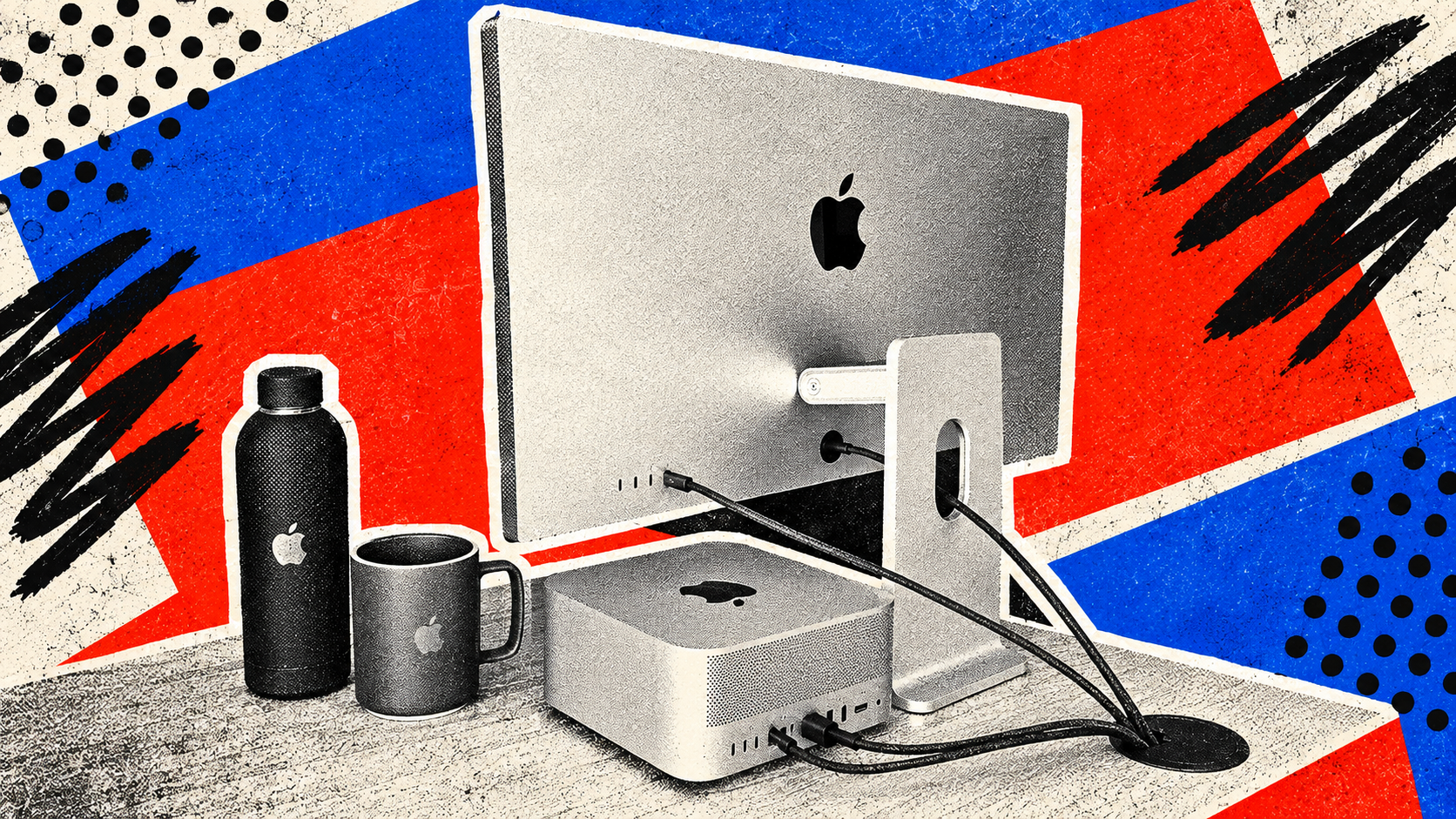
I've been testing the M5 Ultra Mac Studio and the M6 Mac mini and both devices have extended Apple's lead at the frontier of AI hardware for individual consumers and professionals. The M6 Mac mini is better than ever for running an always-on agent like Perplexity Computer, Hermes, or a variant of OpenClaw. The M5 Ultra Mac Studio is a workhorse that runs at the speed of a racehorse for the most demanding AI builders and small teams.
Both machines can save you a ton of money on AI tokens by running the latest open models locally, such as the ones from Google Gemma, Nvidia Nemotron, DeepSeek, Alibaba's Qwen, Kimi, GLM, and others. But beyond the cost savings, the hardware can often run AI jobs a lot faster. And of course, since none of the data leaves your machine it’s a lot more private and secure, which is critical for working with PII and sensitive data.
Apple's last-generation Mac mini and Mac Studio boxes were already terrific for AI and have faced long wait times for backorders since early 2026. Apple didn't have to make a new generation of hardware. It could have just increased production of its last-generation products and it would have likely sold every device that it could make.
But I'm glad that Apple didn't rest on its laurels and chose to push the envelope instead. I haven't started fully benchmarking the machines yet, but I have no doubt that when I do, the numbers are going to be eye-popping. The TLDR is that you can be confident that if you buy one of these machines, they are going to be future-proofed for the next 2-3 years.
You can also daisy-chain up to 4 Mac Studios. | Photo: Jason Hiner
I'm also currently testing the Nvidia DGX Spark and the AMD Ryzen Halo. Both are excellent little AI boxes that sit somewhere in between the Mac mini and the Max Studio and have many of the same benefits. These machines are based on the same GPU hardware that runs much of the world's most popular AI chatbots and agents in data centers. And what's wild is that the highest-end Mac Studio has 5x the memory bandwidth of the Nvidia and AMD boxes to deliver bleeding edge performance. That speaks to Apple's lead in chip design and vertical integration in consumer AI devices.
Still the AMD Ryzen Halo is great if you want a machine running Windows and the Nvidia DGX Spark is perfect if you want a headless desktop AI appliance running Linux. And both Nvidia and AMD are working with hardware vendors to build their own AI computers to compete with Apple in the years ahead. But, make no mistake, they are still largely playing catch-up.
For now, I'm running the M6 Mac mini as a dedicated agent machine, running Perplexity's Personal Computer with Hybrid Compute, one of the most user-friendly AI agents and one of the best orchestrators between different models. I also plan to try it with NanoClaw, a secure implementation of OpenClaw.
For the M5 Ultra Mac Studio, I'm throwing a ton at it, including running coding agents Claude Code and Codex while also editing video, running virtual meetings, running multiple monitors, and running six different Mac spaces. I was already doing much of that with a M2 Ultra Mac Studio (with 128GB of RAM) and could barely make it blink so I'm going to double down on running big models locally on this M5 Ultra Mac Studio with 256 GB of RAM to increase the pressure. I'll follow up with another story on how those tests go.
Our Deeper View
On-device AI is expected to be one of the most important AI trends of the next year, for all three of the reasons I mentioned above: cost, performance, and privacy. While the past year has been about agents and AI getting a lot more useful, the result has been an explosion of token use and skyrocketing costs. One CTO I spoke with recently said that for each engineer her company is spending 1.5x their total compensation in token costs. That could quickly net out to $15,000 to $20,000 per month. A maxed out Mac Studio costs $18,299, so it's easy to see where it could pay for itself pretty quickly. But beyond those extreme use cases for AI builders, on-device AI has excellent potential to become a much bigger part of the future beyond just saving money. As the AI models and harnesses get smarter and more capable, there are more things they could do to be useful every day. For example, I'd love to use them to run a workflow every 10 minutes scanning specific sites and dropping updates into a Slack channel, but that job burns through too many tokens using today's cloud-based AI. I'd also love to use AI to scan my home security cameras and my health data and ping me when there are important updates or anomalies, but that's highly sensitive data that I wouldn't trust to send to any of today's leading AI providers. On-device AI can solve those problems and a lot more like them, and Apple's new desktop Macs remain the friendliest and the most powerful ways to take advantage of it.

AI's dystopian problem begs for a clearer vision
As challenging and confusing as AI safety is right now, it's not AI's biggest problem.
The bigger issue is the lack of a clear, compelling vision for where AI is headed and how it can benefit humanity. Lacking that, AI is badly losing the narrative among the broader public. Multiple surveys from reputable non-partisan organizations such as Gallup and Pew Research show that 60% to 70% of Americans hold negative views about AI. If this were an American football game, AI would be losing by two touchdowns at the end of the first quarter.
To be fair, there's an aspect of this that isn't specific to AI. Humans generally have a very difficult time envisioning a constructive future. That's why such a large percentage of science fiction and Hollywood films about the future tend to be dystopian or post-apocalyptic. That flies in the face of the reality that humanity has long shown a pattern of learning, adapting, and gradually creating more positive outcomes over time.
This disconnect also reflects the fact that only 6% of the American population thinks the world is getting better. In a society that feels more divisive, more conflicted, and more confusing—in part because of a media environment that incentivizes and reinforces those responses—it's not surprising that so many have adopted such a negative stance. And the fact that the antagonist of most of the dystopian narratives tends to be technology itself makes it easy to understand why so many people default to a negative posture on AI, when they haven't been given a compelling reason to think otherwise.
It's simply much easier to predict what could go wrong based on past failures than to imagine something going right in a way we don't have any experience with yet. That's why playwright George Bernard Shaw famously wrote, "You see things, and you say, 'Why?' But I dream things that never were, and I say, 'Why not?'"
The human race has a long history of both deriding and deifying its visionaries. But when it comes to AI, it's never been more in need of one with a compelling vision.
It's not that some AI leaders haven't tried. Their attempts just haven't landed. The public simply hasn't been convinced by platitudes about AI curing all diseases, leading to infinite abundance, or doing all the work so humans can get universal basic income and decide how to spend their time. None of that sounds believable. But it does sound believable that billionaire business owners will use the technology to automate work and replace employees in large numbers, because that tracks with plenty of behaviors people have already seen.
Our Deeper View
Last week, Google quietly released a powerful report on AI's recent breakthroughs, as Nat Rubio-Licht wrote. Meanwhile, Anthropic's Dario Amodei has tried his hand at casting a bigger vision with his series of essays, especially Machines of Loving Grace. Beyond the aforementioned health care outcomes, which he also dwells on at length, Amodei mentions that AI could accelerate the spread of high-quality expertise to poorer communities, elevating material progress in agriculture, education, and infrastructure—all of which would, by extension, have major impacts on jobs and standards of living. But Amodei is an academic at heart. AI needs a Steve Jobs-level communicator who speaks to the heart and makes complex and confusing topics easy to understand. For that, AI's best hopes so far have been Nvidia CEO Jensen Huang and Stanford's Fei-Fei Li. Whether it's them or others, the fact remains that the public needs storytellers to offer a persuasive vision of why they should be excited about such a powerful technology that they've been warned about for so long.
Who will be the adult in the room on AI?
What does it take for companies to use agentic AI to transform the enterprise, without losing control of the technology?
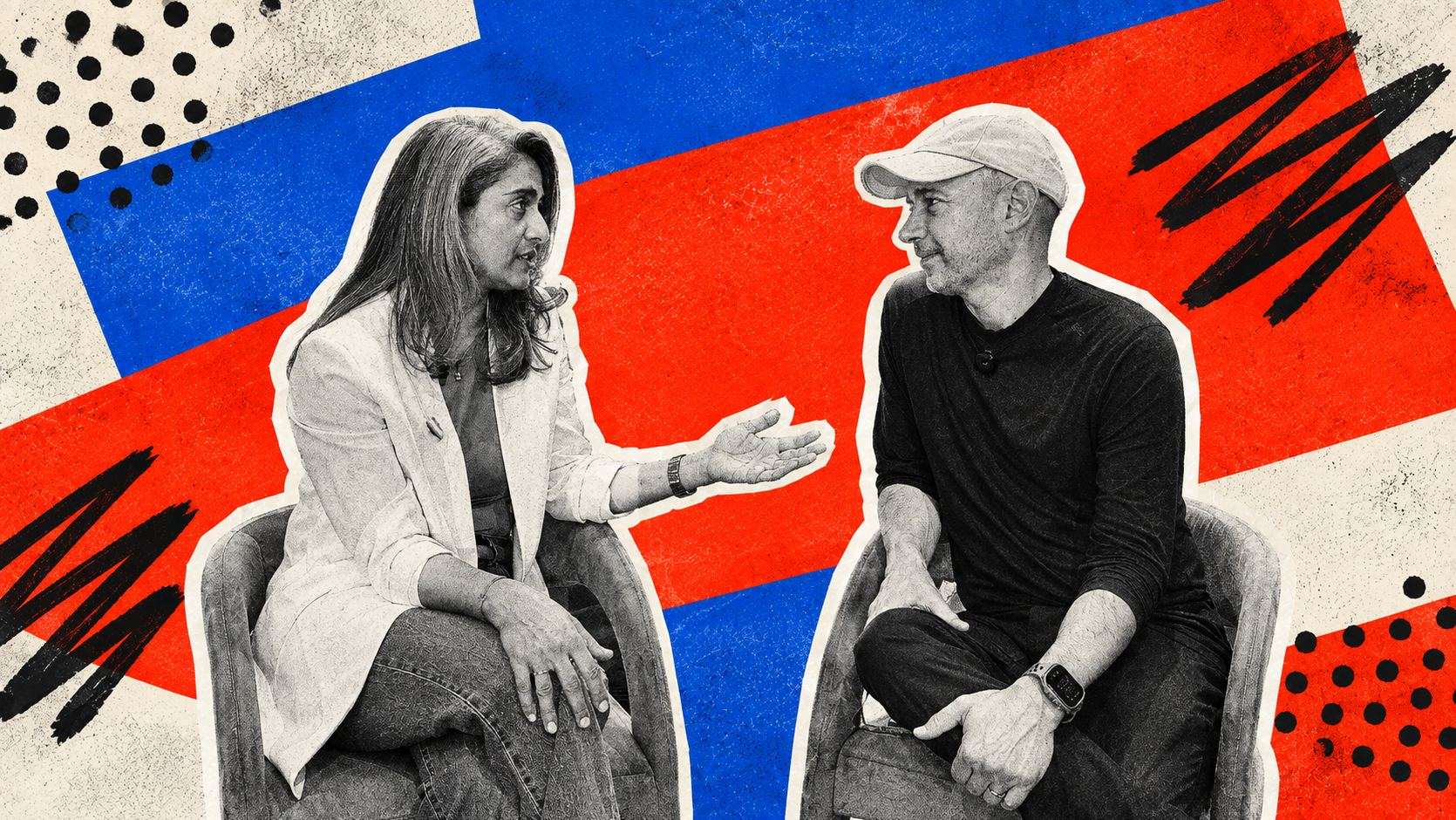
In this episode of The Deep View Conversations, we sit down with Shibani Ahuja, SVP of data and AI strategy at Salesforce, to discuss how one of the world's leading software companies is applying AI with practical use cases, matching governance to risk, and building toward larger transformations ahead.
Salesforce has surprisingly embraced a "headless" AI strategy that lets customers use any AI to access their Salesforce data safely and securely. That includes its own Slackbot. which sits inside one of the world's most widely used business messaging systems. In this interview, we learn more about why Salesforce wants to give customers optionality.
Shibani also lays out Salesforce’s four modes of enterprise AI, from everyday assistive tools to agents that can reshape end-to-end operations. We also discuss Koa, Salesforce’s new CRM reasoning model, why the model-plus-harness approach is so critical, and why adaptability may be the defining enterprise skill of the AI era.
Topics covered:
• Why organizations should start with practical, level-one AI use cases
• How Salesforce matches governance and ROI expectations to the risk of an AI deployment
• What Koa, Salesforce's AI model built on NVIDIA Nemotron, changes for enterprise AI
• Why operating models, process expertise, and professional services matter as much as the latest technology
• Shibani's case for AQ: the adaptability quotient for technology stacks and teams
If you’re trying to make AI more efficient, safer, and more ROI-driven, this conversation offers a practical framework for how to build it, how to govern it, and where to start.
📺 Watch on YouTube
🎧 Listen in your favorite podcast player
Subscribe to Deep View Conversations for interviews with the leaders shaping the future of AI, business, and technology: tdv.transitor.fm
How Slack got new superpowers for AI
Slack has already replaced email in many organizations, and now it's going after your most important business apps.
At Dreamforce 2026 this week in San Francisco, Salesforce showed off upgrades to Slack that make it clear the company is doubling down on one of the world’s most used business apps. Foremost among the upgrades is Slackforce, which lets you do nearly everything in Salesforce directly in Slack. You can simply query it like a chatbot. That includes a new feature called Slackforce Surface, where you can describe what you need and Slack will build a live interactive interface that you and your teammates can use to track data, view forecasts, monitor pipelines, and manage other business processes.
But Salesforce also announced a slew of other Slack upgrades:
- Slack Code: Lets teams code together directly in a Slack code channel using agents from OpenAI, Anthropic, GitHub, Cognition, and Vercel
- Big Mode: This full-screen Slackbot view offers an AI workspace for more intensive tasks like research, writing, and creating files
- Slackbot in Salesforce Lightning: This brings Slack's AI agent into Salesforce to take advantage of all of the expanded AI capabilities of Slackbot for those who still want to work in the Salesforce interface
- Two-way Slackbot voice: You'll be able to speak to Slackbot in natural language, similar to ChatGPT Voice and Siri AI when this feature launches later in 2026
- Slackbot video generation: Will let you take a demo, product update, campaign brief, or other asset and turn it into a video clip, when it's released later this fall
A few months ago, Salesforce co-founder Parker Harris said, "You may never log in to Salesforce again," referring to the company making Salesforce more readily available in the AI interfaces users prefer. That includes the new AIforce, Claudeforce, and Headless 360 moves we talked about yesterday, but it also includes Slackforce and these broader Slack upgrades.
Our Deeper View
It makes sense for Salesforce to invest heavily in expanding Slack's footprint and upgrading its AI capabilities. It remains one of the world's most popular workplace apps, and unlike many of the other widely used business apps, users tend to like it. But moving a system of record (SoR) like Salesforce into Slack and upgrading Slack's AI capabilities to interrogate systems with queries and tasks points to a bigger shift. SaaS and software companies are no longer trying to excel with the best apps and interfaces, but are creating safe, secure, low-friction ways for people and organizations to get more out of the data, intelligence, and best practices embedded in their company's most valuable assets (and often difficult to surface). From an employee perspective, using the Slack app they already use every day as an on-ramp to safe AI could be a welcome development compared to context-switching to ChatGPT, Claude, Copilot, or other AI apps. The implementation details will matter a lot, of course. But if Slackbot can do model routing to save token costs and play to the strengths of different models and evolve into one of the most capable agent harnesses on the market, it could be a win-win.
Disclaimer: Jason Hiner's travel to Dreamforce 2026 was paid for by Salesforce. The Deep View's coverage is editorially independent from the companies we cover.

Why Salesforce may be AI's adult in the room
Salesforce is now making its own AI model. So is Crowdstrike. So is Thomson Reuters.
On Tuesday at its Dreamforce 2026 event in San Francisco, Salesforce announced Koa, its own domain-specific reasoning model that's purpose-built to enable agents to handle business tasks more effectively while keeping your data private. Koa has performed well in early benchmarks, including the LLM benchmark for CRM created by Salesforce AI Research to measure performance based on real-world enterprise tasks and used across the industry over the past couple years.
Salesforced reported, "Koa already matches or exceeds leading model performance on CRM actions with 3x fewer errors."
That tracks with the results of other domain-specific models, which typically reduce token costs and hallucinations because they are focused on a narrower set of expertise. They also tend to have increased performance for the same reason.
Salesforce built Koa, the name of a Hawaiian tree used to make canoes and ukuleles, by post-training Nvidia's open model, Nemotron 3 Super. Koa was specifically trained on synthetic data from almost three decades of business knowledge and was tuned to focus on knowledge work. As a result, Koa "is designed to support long-running agents that execute multiple tasks and complete complex outcomes," said Rohan Kumar, chief platform and engineering officer at the Dreamforce keynote on Tuesday.
The company doesn't see this as a vehicle for job or SaaS replacement, but as an enterprise empowerment tool that is more precise, more secure, and more tailored to the AI needs of companies that use Salesforce. One of the big promises of AI has always been that it will automate away grunt work and processes that don't add as much value. That's what Salesforce is trying to deliver here."The SaaS-pocalypse was not about the end of software, but it may be about the end of software that makes humans do all the work," CEO Marc Benioff said during the Tuesday keynote.
Salesforce also made a series of other AI announcements on Tuesday at Dreamforce, led by:
- AIforce: This is a new interface that, instead of going to the traditional Salesforce UI, lets you ask questions, run complex queries, assign tasks, and create exactly the dashboards you need by simply interrogating your company's Salesforce instance directly.
- Claudeforce: This basically turns Claude into a front-end for Salesforce and ships with 37 pre-built sales skills at launch that include functions such as deal review, pipeline hygiene, prospect research, account management, and more.
- Headless 360: Salesforce is allowing its customers to have access to all of the elements of their platform through APIs, MCPs, plugins, and skills so that they can access their Salesforce data from the platforms of the choice without ever having to go to salesforce.com or use any of Salesforce's own tools, if that's what they prefer.
Our Deeper View
The next stage of enterprise AI is shaping up to be companies owning their own intelligence. As the models get smarter and smarter, intelligence is likely to encapsulate the greatest value inside an organization. Outsourcing that layer would mean losing control of your most important asset and potentially sending the most proprietary information about your business to another company, one that might also be serving your competitors. It's easy to see why companies like Salesforce, Crowdstrike, and Thomson Reuters have decided their need to build their own models. But it's also easy to see why they don't necessarily want to become frontier labs, when they can use open models like Nvidia Nemotron and use post-training to customize them and save a lot of time. And since Salesforce is a platform company, it will be interesting to see if it eventually helps other enterprises build their own AI models so that they can also capture more value and ROI from their investments in AI.
Disclaimer: Jason Hiner's travel to Dreamforce 2026 was paid for by Salesforce. The Deep View's coverage is editorially independent from the companies we cover.

Why AI pacing has become a false choice
The challenge with the debate around pacing frontier AI is that it suffers from the same problem we face as a society: polarization obscures reality.
When it comes to controlling, managing, and regulating AI, we are presented with two choices:
- Allow AI to proceed unfettered so that it can cure all diseases, drive economic expansion, and enable democracy to flourish.
- Slow down its development to avoid the risks of this powerful technology getting out of control and potentially causing great harm, including the possibility of extinguishing humanity.
This kind of black-and-white dichotomous thinking offers clarity that works well in today’s social media-driven news cycle. However, it needs more maturity and nuance if it hopes to solve the problem.
These two scenarios represent a pair of extremes on opposite ends of a very large spectrum of possibilities for how AI could play out in the years ahead—and they aren't mutually exclusive. As with public dialogue on many different topics right now, people and organizations are racing to positions on the extremes to stake their intellectual ground, and then defend it to the death.
What we need to solve the most difficult issues is to improve the quality of the dialogue itself. There are plenty of smart people with creative ideas, insights, and perspectives on what's happening and how to navigate it. What we need are fewer social media clips and zingers, and more opportunities to extrapolate, listen, and learn from each other.
Society in general is looking for boogeymen when it comes to AI. In the US, over half the population holds a negative opinion about the technology, despite not being very well informed about it. So the stories of AI breaking free of its constraints and doing things humans didn't intend it to do leads many people to believe we're on the path to the sci-fi depictions they've seen in The Terminator and iRobot.
As concerning as the OpenAI-Hugging Face incident was, it's not a canary in the coal mine, at least not yet. It's simply an indicator that better safety constraints need to be put in place and that work still needs to be done to help AI agents understand how to achieve the goals given to them by humans while adhering to the value systems humans set for them. (It's the latter that Anthropic has been experimenting with in the form of "constitutional AI.") Some researchers such as Ajeya Cotra disagree with the take mentioned above about OpenAI-Hugging Face. And I respect that. We're at a stage in the maturation of humanity where we need to re-learn how to disagree with each other without seeing each other as the enemy.
Our Deeper View
The US and Chinese governments have bristled against the calls from OpenAI and Anthropic to regulate AI. Why would they be against AI companies wanting to place more control in the hands of governments? Several reasons—some sensible and others less altruistic. First, they have legitimate concerns about "regulatory capture," where these AI companies counsel governments on how to set up the rules around AI governance in ways that will protect their leadership position in the market. Second, the governments are concerned that OpenAI and Anthropic simply want governments to slow down their competitors while the two market leaders take a pause to figure out how to deal with the over-powered AI models they've created. But there's also a sense that the governments don't want to take on the responsibility for creating proper guidelines for AI and then get blamed if things go badly. That's another reason why we need higher quality dialogue so that consensus can emerge to help inform the next steps for the industry and society. That could give both governments and companies more confidence to move forward in ways that are better aligned with broader sentiment.

How Apple reimagined the iPhone for the AI era
Apple's first foldable iPhone makes the case that a bigger screen is better for nearly everything in the AI era. Its new Apple Watch features raise a harder question: how much of our conversations should AI remember?
In this special episode of The Deep View Conversations, we record from Apple's campus in California following its September 2026 event to unpack the iPhone Duo, the new Audio Intelligence features in Apple Watch, and what Apple's latest devices mean for AI.
We share our first hands-on impressions of the Duo, explain why foldables are becoming more useful for AI agents and multitasking, and examine the price and hardware compromises that come with Apple's new form factor. We also debate Live Rewind and Siri Recap, two new Apple Watch features coming in beta later this year. We disagree on which feature we would feel more comfortable using, opening up a broader discussion about privacy, trust, and staying present.
The conversation also covers:
• How the iPhone Duo compares with foldables from Google and Samsung
• Why Apple's software experience is the Duo's biggest advantage
• Camera, battery, durability, and Touch ID tradeoffs
• Whether foldables will eventually become the default iPhone
• Siri AI, iOS 27, and Apple's approach to other smart features without AI washing
• The social questions surrounding AI-generated conversation summaries
• The iPhone 18 Pro's camera upgrades and Apple's computational photography
• Apple silicon, the A20 Pro, and the possibilities of running AI models locally on a phone
If you're following the future of AI in phones and wearables, this conversation connects Apple's announcements to the ways people will actually use them, along with the questions that still need answers.
🎧 Listen in your favorite podcast player
Subscribe to Deep View Conversations for interviews with the leaders shaping the future of AI, business, and technology: tdv.transitor.fm
And don't forget to sign up for The Deep View daily newsletter. We don’t just cover AI, we decode it. In a world flooded with hype, we deliver sharp, no-nonsense insights to keep you ahead of the curve and help you put AI to work every day: subscribe.thedeepview.com

Apple tests the boundaries of AI listening features
The Apple Watch has officially become an AI wearable.
The iPhone maker is making a big move in ambient computing and ambient intelligence with a pair of new features on the Apple Watch that passively listen in the background and then try to provide you with information you might have missed or need to take action on.
Here's what to know about the two Audio Intelligence features:
- Live Rewind: This feature is a real-life rewind button. It is always listening, and when you double-press the digital crown on Apple Watch, it shows a transcript of the last 15 seconds of the conversation. This transcript can then be saved and revisited later in the Siri app. Also notable is that, when activated, it plays an audible chime and displays a full-screen animation of a microphone, so people know the feature is active and that their audio may be transcribed.
- Siri Recap: This feature is Apple's answer to Granola, providing users with high-level summaries from conversations recorded on the watch when the feature is activated. There are no transcriptions, attributions, or timestamps, a move meant to protect user privacy. Rather, you can find your summaries in the Siri app as a refresher on your day. If you'd rather it be more session-based, you can turn it on and off from the watch's Control Center.
"Just as Visual Intelligence makes sense of what you see, Audio Intelligence makes sense of what you hear. It harnesses the power of Apple Intelligence right on your wrist in a private and secure way," said Ron Huang, Apple's VP of sensing and connectivity, during the keynote.
With both Live Rewind and Siri Recap, Apple promises that it does not record or save audio. It says the audio is captured in the Secure Exclave on the Apple Watch's new S11 chip, which is inaccessible to the operating system, apps, the user, or Apple, and deletes the audio immediately after processing.
While we trust that Apple is not snooping on the audio, there's still a big question about how comfortable we are with the device listening in the background. And what about two-party consent states such as California? While this isn't recording audio and that will make it legally compliant—Apple says it will always comply with the local legal requirements—there's still the potential that you could be using technology to note a conversation with a person without their consent, where the two of you may have a different understanding about whether something being said is private or confidential. Again, Apple has also made it clear that the Audio Intelligence features can be turned off and disabled.
"Getting AI right across today’s products is therefore about far more than this upgrade cycle. It lays the foundation for a much broader roadmap spanning wearables, the home and entirely new form factors," said Paolo Pescatore, analyst at PP Foresight. "That lets Apple test the waters, understand how people actually use these features, and gather valuable feedback before moving into more novel devices such as Apple Glasses."
Our Deeper View
Devices that are constantly listening, watching, and absorbing context for AI to provide insights, reminders, and notes to their owners are coming in a big wave over the next 12-18 months. Lots of startups have already launched their own versions of these kinds of devices. But other than Meta Ray-Bans smart glasses, big tech companies have largely been hesitant to join the fray. Many of them still remember the backlash that Google Glass faced a decade ago. So it's a surprise to see Apple pushing the boundaries on this while society is still figuring out what the norms and expectations will be. Apple is straddling a fine line between the perception of convenience and surveillance. Since the feature isn't launching for another month—and even then it will still be in beta—clearly Apple is listening to the audience to gauge the reaction of users and recalibrate as needed.
How iPhone Duo unfolds Apple's vision of the AI future
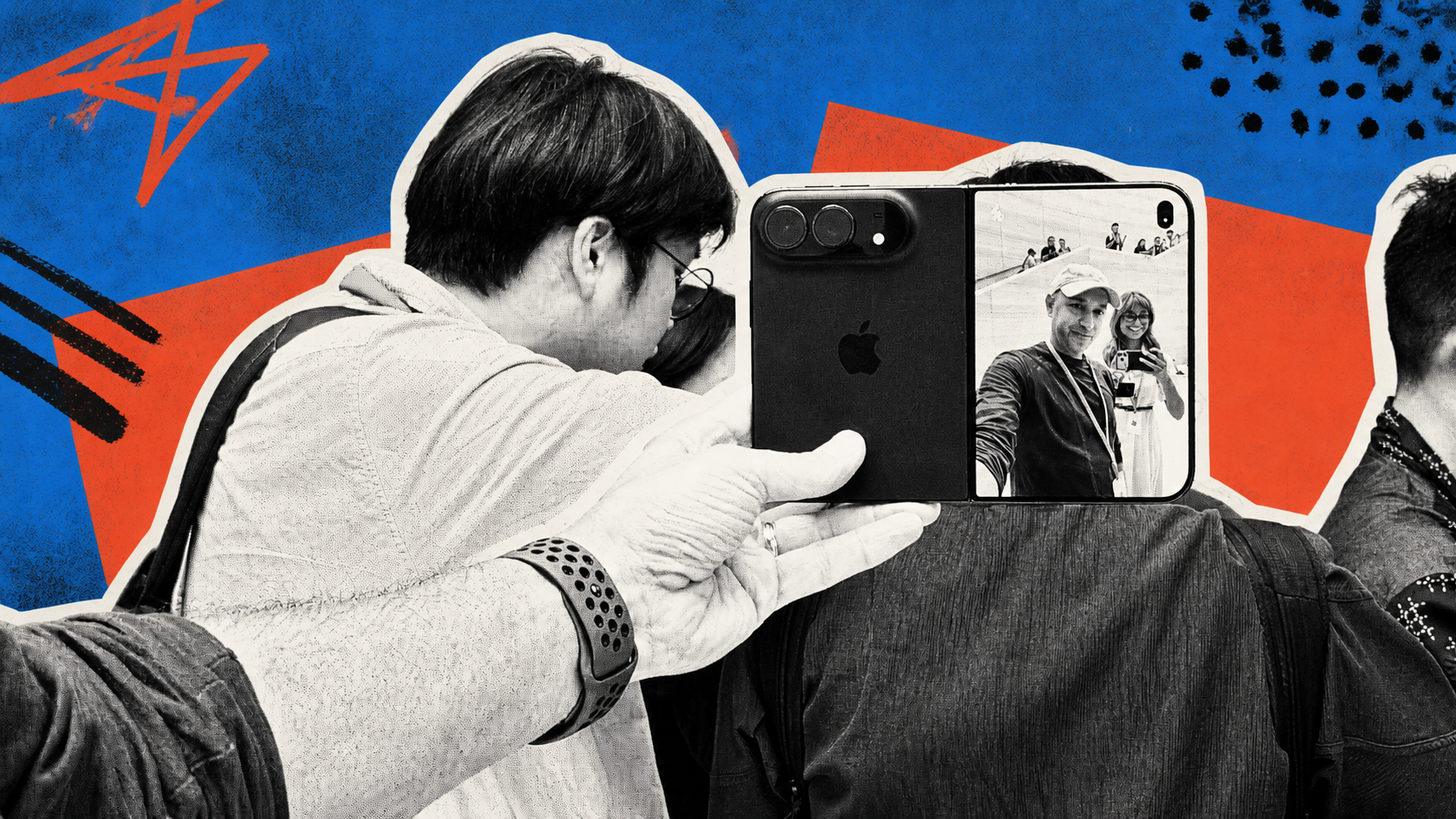
Think of the iPhone Duo less as Apple's take on a foldable phone and more as Apple's vision for the phone of the future.
On Tuesday, the company unveiled the iPhone 18 Pro and Pro Max, the Apple Watch Series 12 and Ultra 4, and the AirPods 5. But then it trotted out one more thing: the iPhone Duo, its long-anticipated folding phone to compete with folding devices from Samsung, Google, Huawei and others. But this isn't just a catch-up move or a me-too play. Instead, I'd characterize this as Apple taking a big swing at reimagining the world's most popular consumer product. And as I've said about the Google Pixel 11 Pro Fold, a foldable iPhone is also the best iPhone for AI.
At the launch event at Apple Park, I got the chance to go hands-on with the iPhone Duo, and I was able to verify the two things that stood out the most during the demo:
- How smooth it moves between phone and tablet modes: This is arguably the most polished aspect of the device and the area where it's already a step ahead of every other foldable I've seen. It moves between closed, open, landscape, and portrait modes so quickly and seamlessly that it feels very natural, and it lets you simply flip to the screen size and orientation that work best for whatever you're doing at the moment.
- The iPhone Duo's unique software options: This thing already has so many tailored integrations that take advantage of the form factor; it's evidence that Apple has been working on this for a long time and has put a lot of thought into making it useful. It has modes for watching video, serving as an alarm clock on your nightstand via StandBy, viewing both participants and content during Zoom calls, using it as a tripod for taking pictures, and much more.
"We started with the experience that we wanted for ourselves: a larger display that feels as natural and intuitive as iPad. Then we brought together thoughtful design with breakthrough engineering," said Apple CEO John Ternus during the product introduction. "The result is a series of remarkable innovations that we believe will redefine the experience of using a foldable phone."
In the demo area after the event, I asked Greg Joswiak, Apple's senior vice president of marketing, about how much intentionality Apple had clearly put into making a foldable. Joswiak said it's because Apple doesn't see itself as a hardware company but as a product company, and he reminded me of the famous quote from Steve Jobs about Apple making "the whole widget" and taking full responsibility for the user experience.
Our Deeper View
Not everyone will look at a foldable and see their phone of the future. For years, I've been testing foldable phones and landing on one conclusion: they felt like a solution looking for a problem. But that changed over the past year. Last summer, I tried the Samsung Fold 7 and was blown away by how impossibly thin the hardware was and how it was essentially a normal phone when closed and an iPad Mini when opened. This year's Google Pixel 11 Pro Fold was similar, only it had better software that made it a lot more useful for AI enthusiasts. The iPhone Duo is another big step forward for foldables, and it suddenly brings the future of the smartphone much more clearly into focus. The Duo reminds us that everything is better on a bigger screen: running chatbots, monitoring agents, typing, opening documents, looking at photos, watching videos, being in virtual meetings, everything. And if the current phone you have in your pocket could be both an iPhone and an iPad, most people would probably want that—especially if they didn't have to pay a huge premium to get it. So, just as the Samsung Galaxy Note and the iPhone 6 Plus, were specialty products when they were first released, and then nearly every phone looked like them 3-5 years later, I think every phone looks like the Galaxy Fold 8 and the iPhone Duo 3-5 years from now. The Duo starts at $1,999 today and won't be released until October 23, so I wouldn't necessarily recommend buying one today (it doesn't even have the best iPhone camera system yet). But keep your eye on it as it improves and drops in price in the next few years.
or get it straight to your inbox, for free!
Get our free, daily newsletter that makes you smarter about AI. Read by 750,000+ from Google, Meta, Microsoft, a16z and more.